Chapter 3D. Circular Intersection Markings¶
§3D.01 General¶
Guidance
01. Pavement markings and signing for a circular intersection should be integrally designed to correspond to the geometric design and intended lane use of a circular intersection.
02. Markings on the approaches to a circular intersection and on the circulatory roadway should be compatible with each other to provide a consistent message to road users. The markings should supplement the signing, both conveying the optional and mandatory movements such that road users will know to choose the proper lane in the approach to the circular intersection and remain in that lane throughout departure from the circulatory roadway.
Support
03. Common circular intersection types include roundabouts, rotaries, and traffic circles (see definitions in Section 1C.02). Traffic circles and rotaries are often much larger than roundabouts. Modern roundabouts feature channelized, curved approaches that reduce vehicle speed. Traffic calming circles are smaller and are typically used on urban or suburban neighborhood streets.
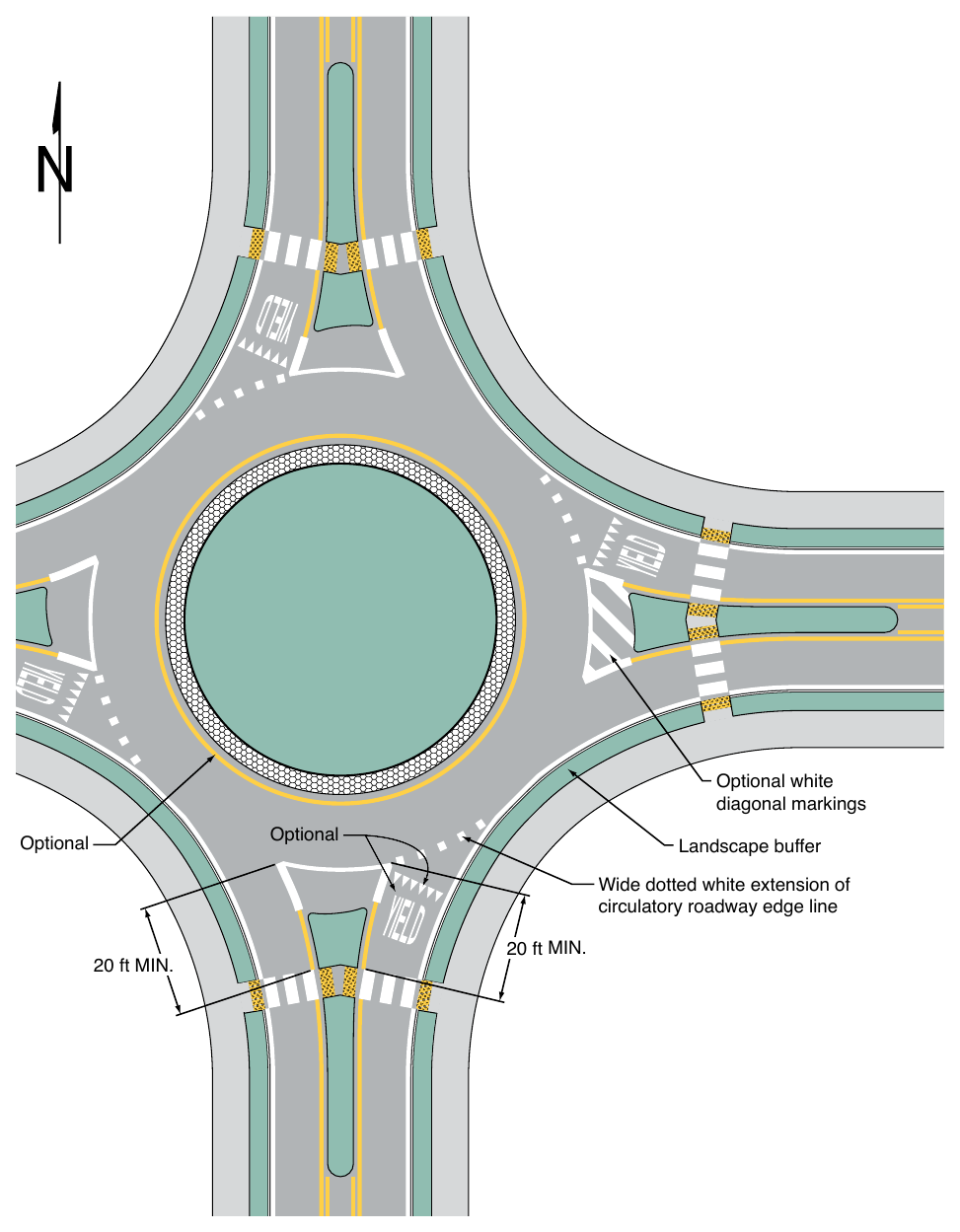
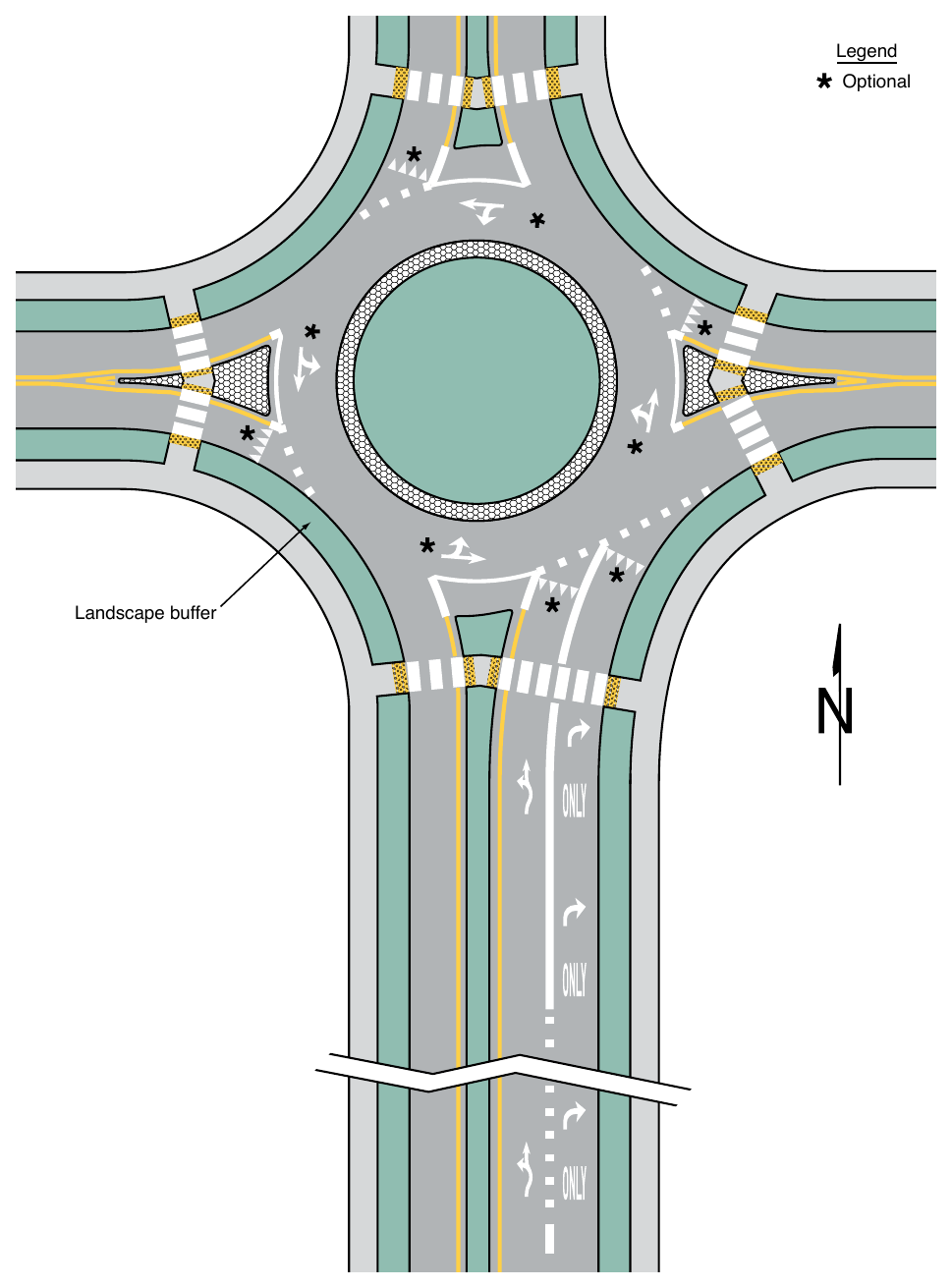
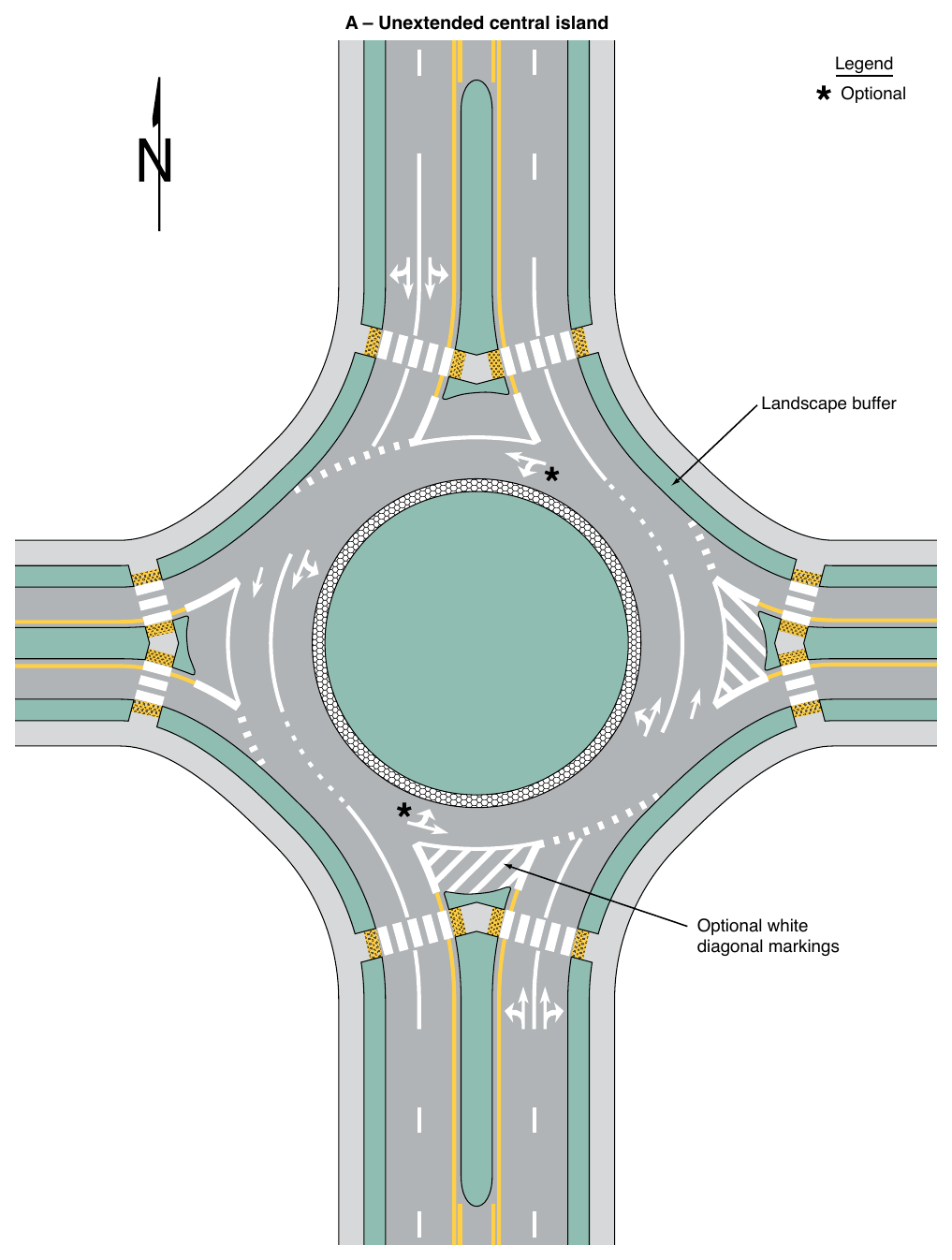
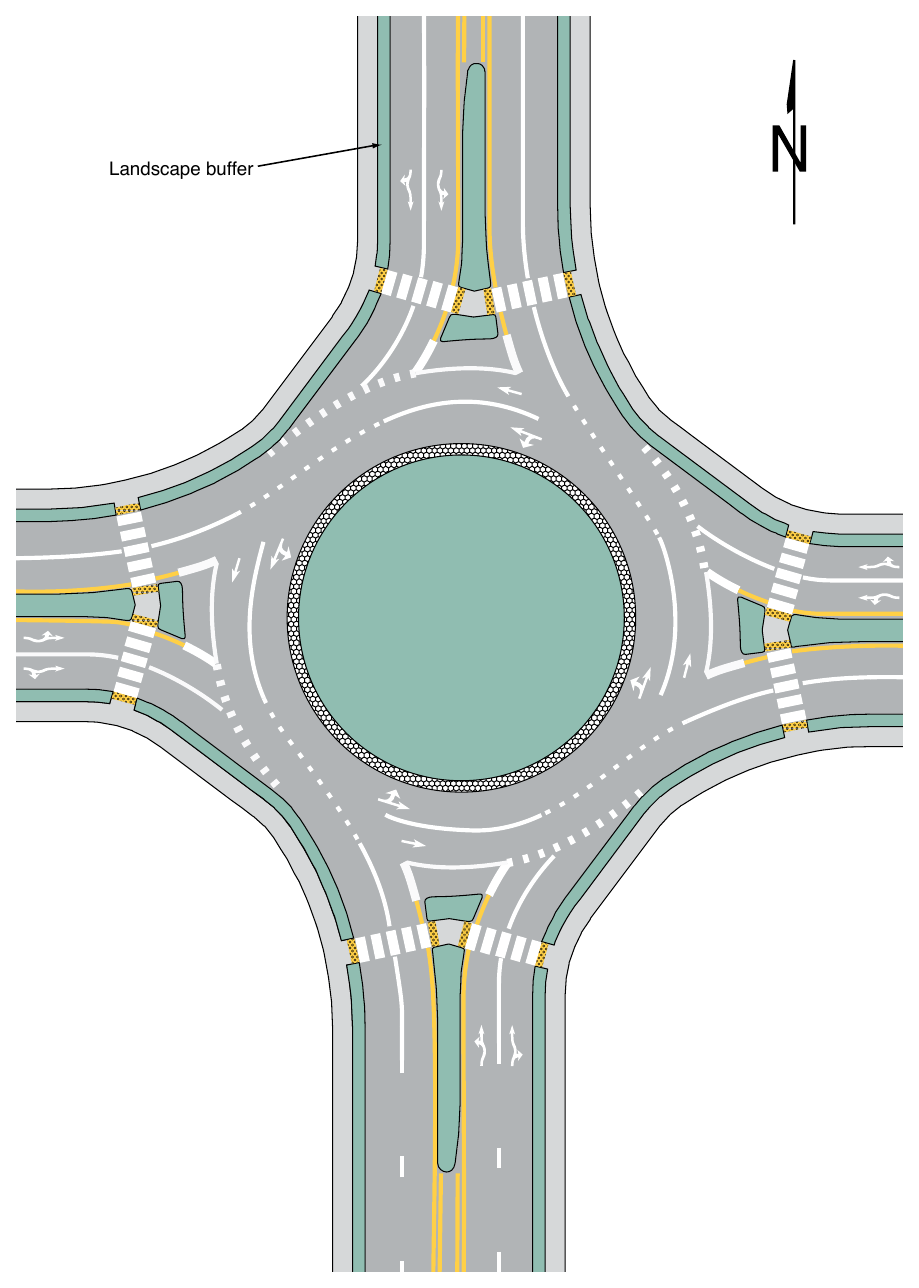
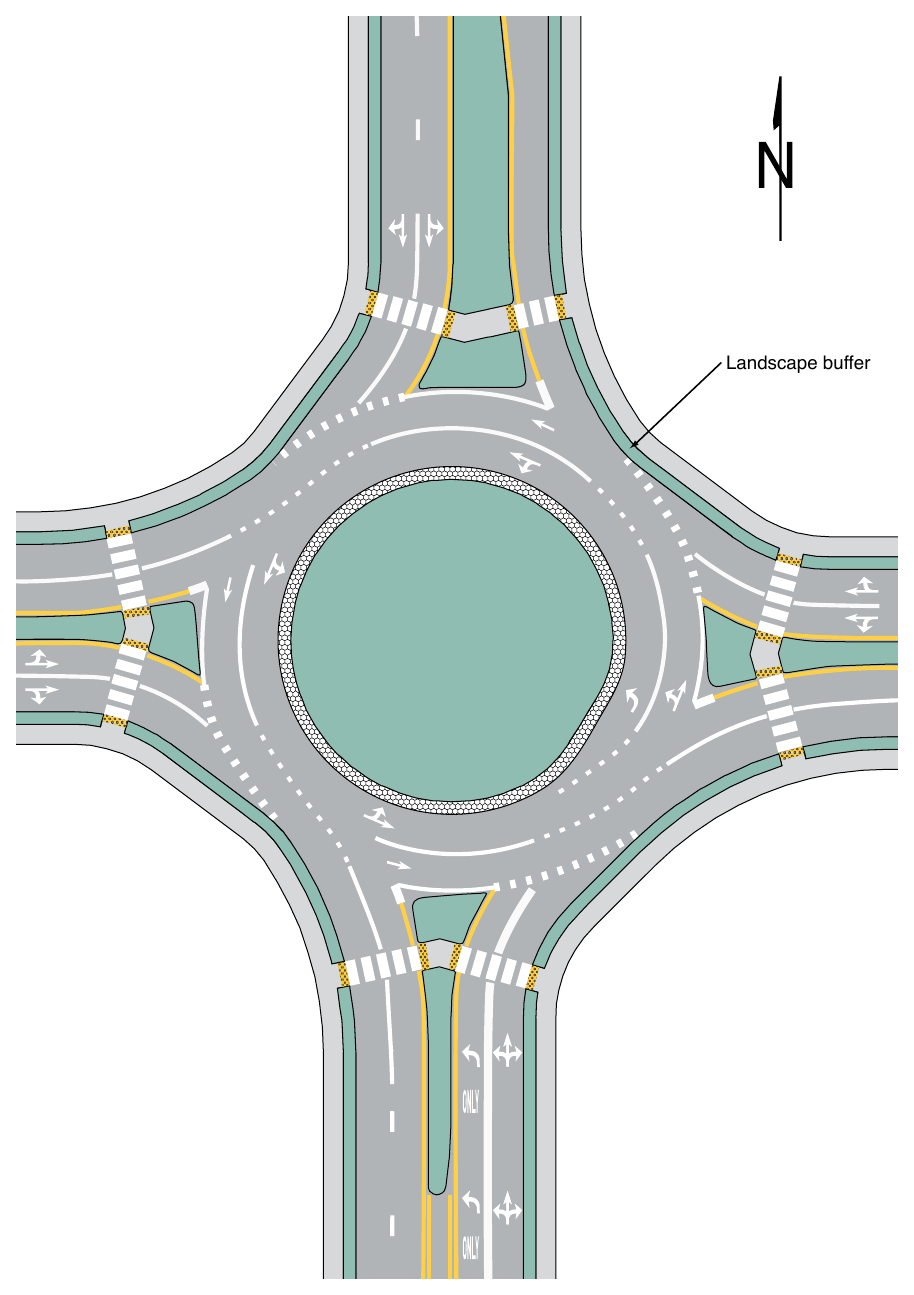
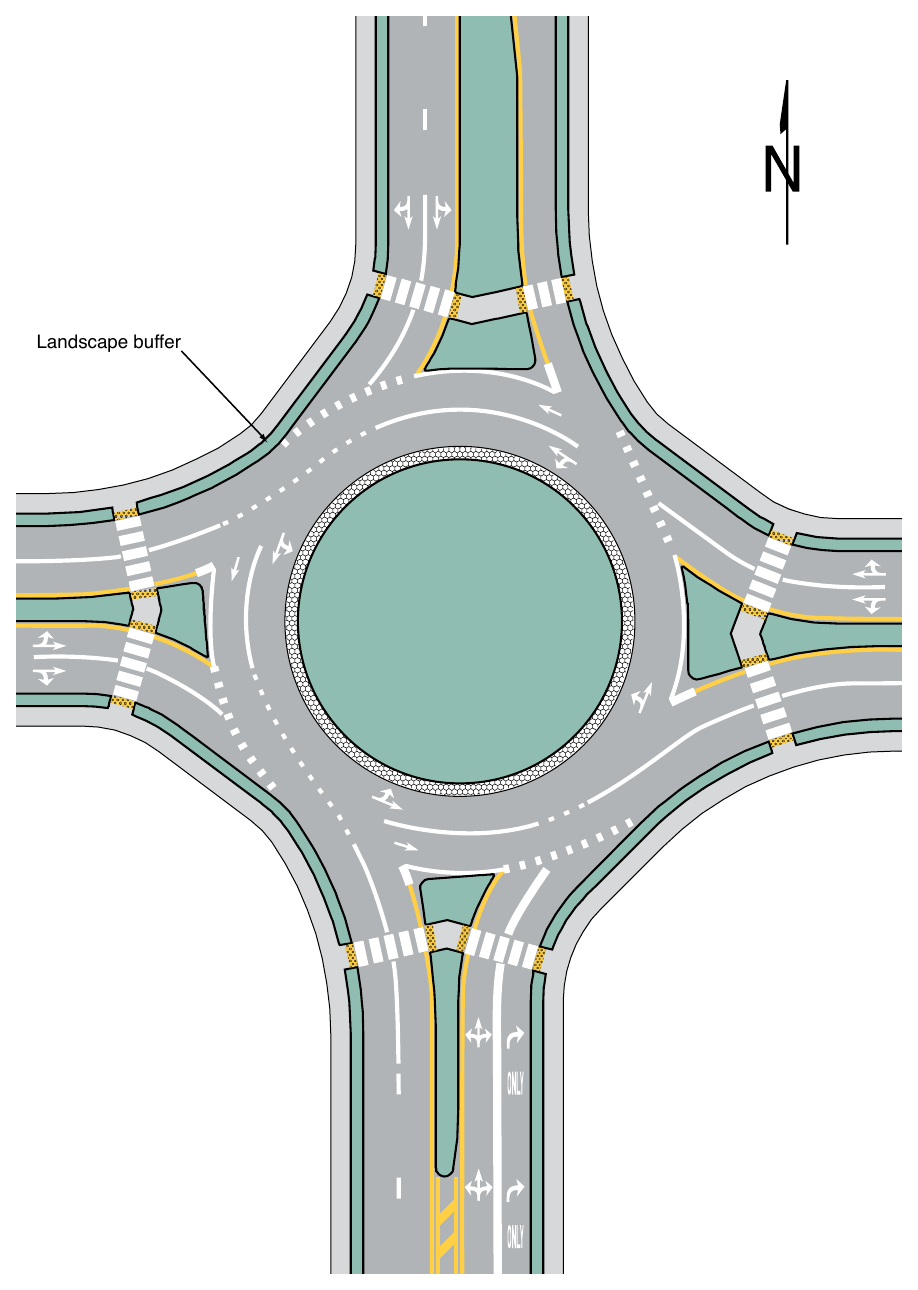
04. Figure 3D-1 provides an example of the pavement markings for approach and circulatory roadways at a roundabout. Figures 3D-2 through 3D-8 illustrate examples of markings for roundabouts of various geometric and lane-use configurations.
05. Actuated LED pedestrian warning signs (see Section 2A.12), traffic control signals, pedestrian hybrid beacons, and rectangular rapid flashing beacons (see Part 4) are sometimes used at roundabouts to facilitate the crossing of pedestrians or to meter traffic.
06. Section 8A.12 provides information about circular intersections that contain or are in close proximity to grade crossings.
07. Section 9E.05 contains information regarding bicycle lane markings at circular intersections.
08. Section 3C.09 contains information regarding crosswalks at circular intersections.
§3D.02 White Lane Line Pavement Markings for Roundabouts¶
Standard
01. Multi-lane approaches to roundabouts shall have lane lines.
02. A through lane on a roadway that becomes a dropped lane (mandatory left-turn or right-turn lane) at a roundabout shall be marked with a dotted white lane line in accordance with Section 3B.07.
Guidance
03. Multi-lane roundabouts should have lane line markings within the circulatory roadway to continuously channelize traffic in the circulatory roadway and through the departure movement.
Standard
04. Continuous concentric lane lines shall not be used within the circulatory roadway of a roundabout.
Option
05. Channelizing lines (see Section 3B.08) and chevron and diagonal markings (see Section 3B.25) may be used on the approaches to and within the circulatory roadway of multi-lane roundabouts to separate traffic lanes, discourage lane changing, and/or compensate for off-tracking of larger trucks and vehicles.
Support
06. Reducing the spacing between lines of a broken lane line allows better delineation of the lower-radius curves typically found in circular intersections.
§3D.03 Edge Line Pavement Markings for Roundabout Circulatory Roadways¶
Guidance
01. A white edge line should be used on the outer (right-hand) edge of the circulatory roadway.
02. Where a white edge line is used for the circulatory roadway, it should be as follows (see Figure 3D-1):
- A. A solid line adjacent to the splitter island, and
- B. A wide dotted line across the lane(s) entering the roundabout.
Standard
03. Edge lines and edge line extensions shall not be placed across the exits from the circulatory roadway at roundabouts.
Option
04. A yellow edge line may be placed around the inner (left-hand) edge of the circulatory roadway (see Figure 3D-1) and may be used to channelize traffic (see Drawing B in Figure 3D-3).
20 ft MIN. 20 ft MIN.
One-Lane and Two-Lane Approaches (Sheet 1 of 2) A – Unextended central island Legend Optional Landscape buffer Optional white diagonal markings
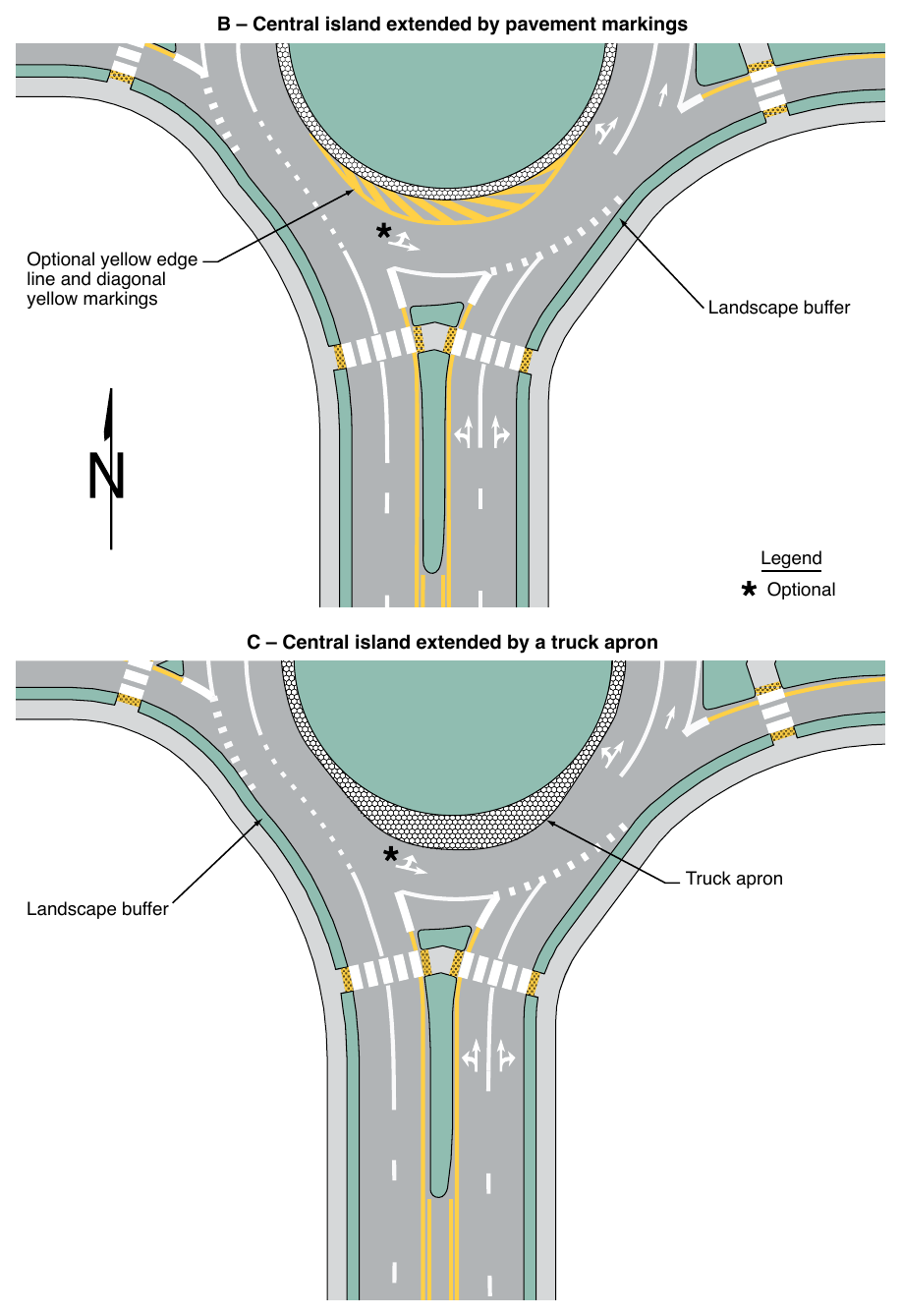
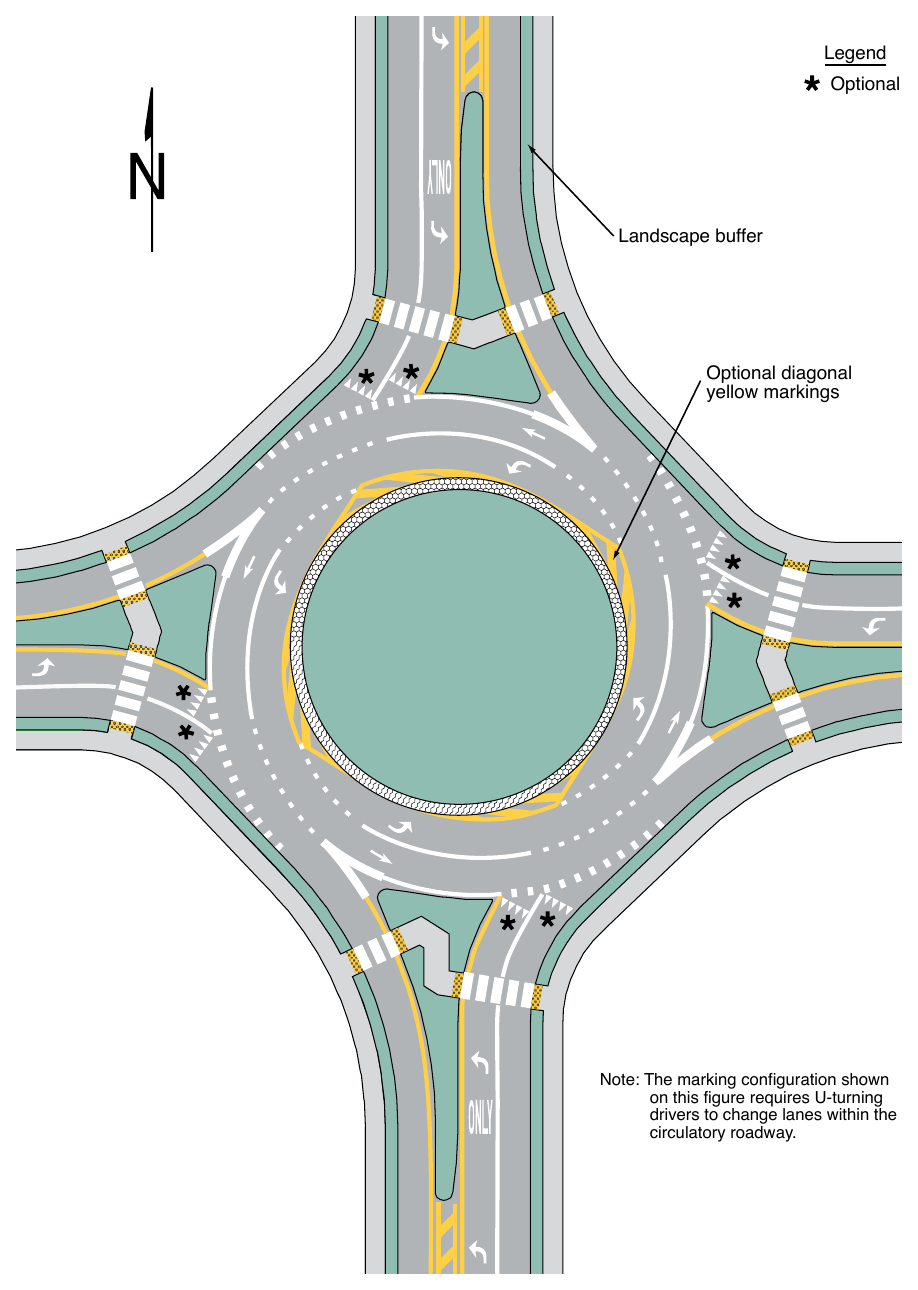
Note: The marking configuration shown on this figure requires U-turning drivers to change lanes within the circulatory roadway.
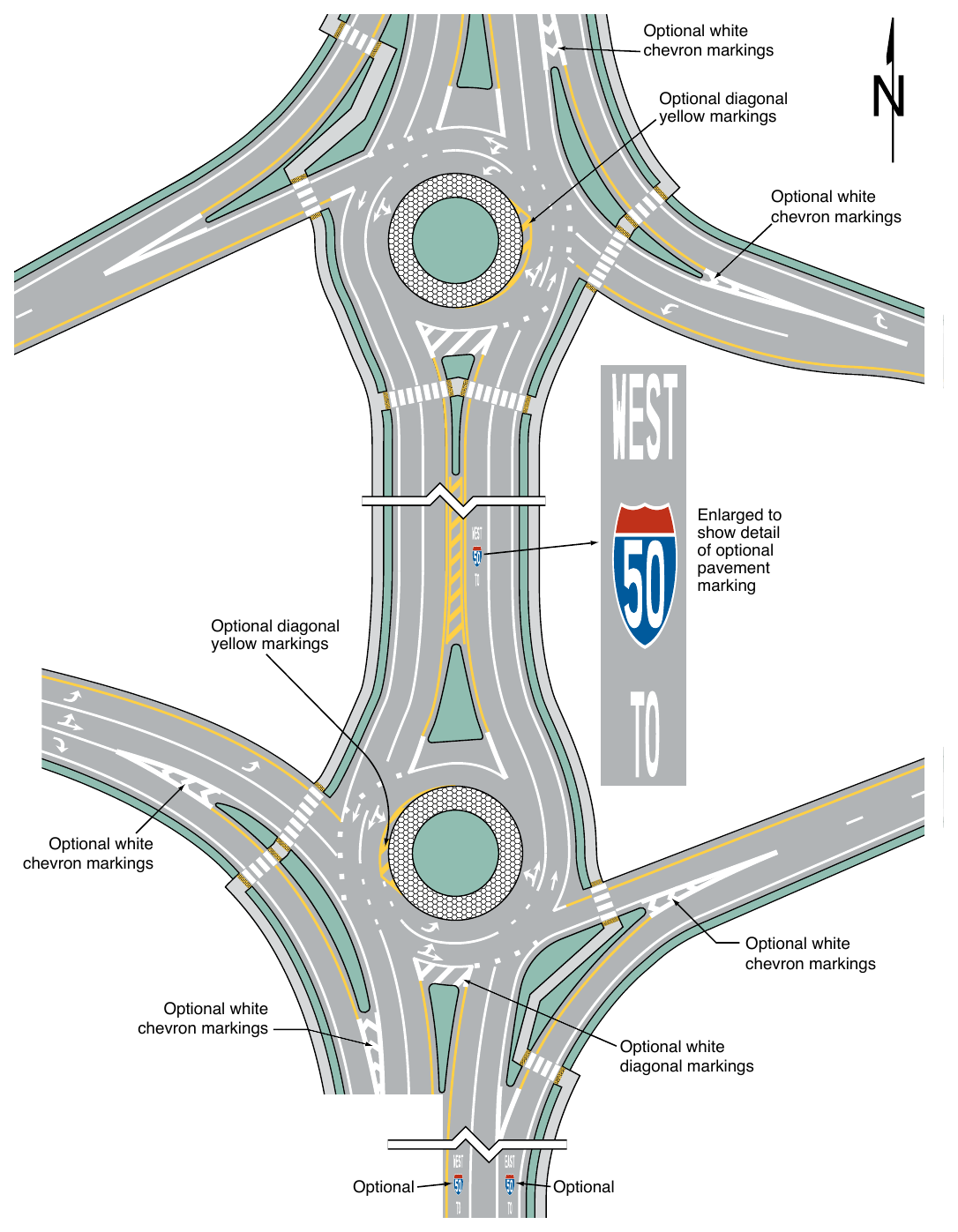
§3D.04 Yield Lines for Roundabouts¶
Support
01. Section 2B.18 contains information regarding the TO ALL LANES (R1-2cP) plaque that can be used beneath the YIELD sign.
Option
02. A yield line (see Section 3B.19) may be used to indicate the point behind which vehicles are required to yield at the entrance to a roundabout (see Figures 3D-1 and 3D-2).
§3D.05 Word and Symbol Pavement Markings for Roundabouts¶
Option
01. YIELD (word) (see Figure 3D-1) and YIELD AHEAD (symbol or word) pavement markings may be used on approaches to roundabouts.
02. Word and/or route shield pavement markings may be used on an approach to or within the circulatory roadway of a roundabout to provide route and/or destination guidance information to road users (see Figure 3D-8).
§3D.06 Arrow Pavement Markings for Roundabouts¶
Guidance
01. Lane-use arrow pavement markings should not be used on single-lane approaches to circular intersections.
02. Lane-use arrows should be used on approaches to circular intersections with double left or double right turns.
Standard
03. Lane-use arrow pavement markings shall not be provided between a crosswalk and a wide dotted line across the lane(s) entering the circular roadway.
Option
04. Where lane-use arrows are used on the approaches to a roundabout, they may be either normal or curved-stem (see Drawing F in Figure 3B-21).
05. An oval or circle may be used with the lane-use arrows to symbolize the central island (see Drawing F in Figure 3B-21).
Guidance
06. If lane-use arrows are used on the approaches to a roundabout, the style used should match the style of the lane-use arrows (normal or curved-stem) used on the regulatory lane-use signs on the approach.
07. If lane-use arrow pavement markings are used within the circulatory roadway of multi-lane roundabouts, normal lane-use arrows (see Section 3B.23 and Figure 3B-21) should be used.
Support
08. Details and sizes of the standard and curved-stem arrows that can be used for circular intersections are contained in the “Standard Highway Signs” publication (see Section 1A.05).
§3D.07 Markings for Other Circular Intersections¶
Option
01. The markings shown in this Chapter may be used at other circular intersections if engineering judgment indicates that their presence will benefit drivers, pedestrians, or other road users. Figure 2B-21 provides an example of markings at a mini-roundabout.